https://alaskaseafoodprocessors.com/index.php?view=housing_roommates
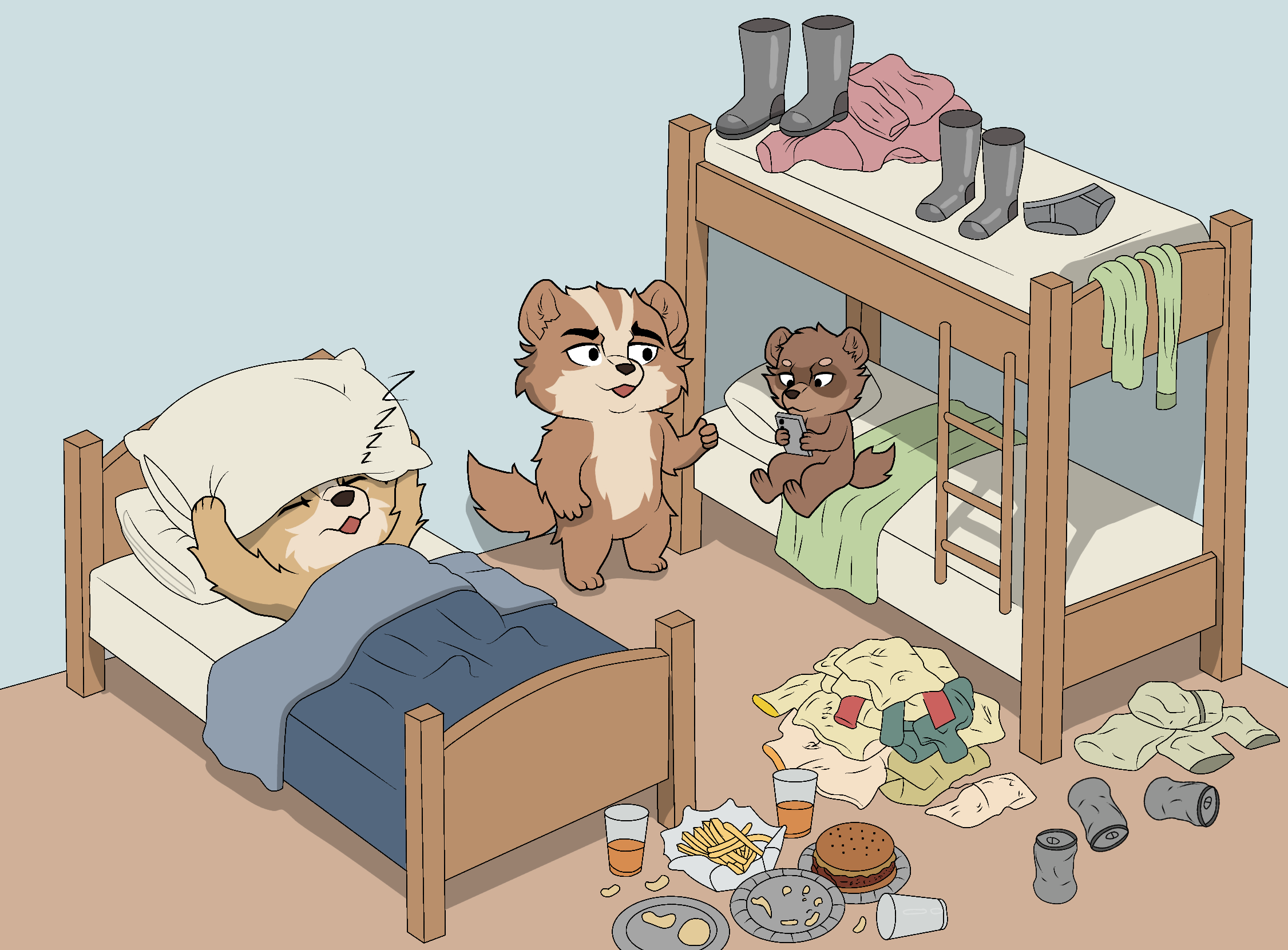
Because seafood processing companies almost always provide employees with meals, housing, and plenty of overtime, these jobs attract people from a wide range of backgrounds. You will be sharing a room with people from cities and rural areas, from different countries, with college degrees, mental health challenges, criminal records, or experiences of homelessness.
In dormitory-style housing, conflicts with roommates are inevitable, especially when everyone is working over 100 hours a week without a day off for weeks. You will need to learn how to get along with others while everyone is irritable, stressed, aching, and sleep-deprived.
Sleep is essential when working 16-hour days, but unfortunately, roommates can make it difficult to get a good night's rest. Some challenges you will encounter include doors slamming, roommates who snore like chainsaws, people not turning down the volume on their phones, talking, and staying up late.
Some people need very little sleep and will stay up late on the phone talking to family in another country. Others might go to the bar after work and then return to the room at 2AM drunk. Your roommate's alarm might go off 30 minutes before yours, and they could spend the next 15 minutes hitting the snooze button.
If needed, practice sleeping with earplugs at home and try different brands to see what works best for you before working in Alaska.
Light pollution can also be a problem. Like with earplugs, you might want to get used to using a sleep mask. Remember, in Alaska during the summer, the days are very long and the nights are short. For example, in Sitka, sunset is after 10 p.m., and sunrise is before 4 a.m.
Roommates can also be a source of light pollution, especially if they work a different shift than you. They might have a day off and the weather could be bad, leaving them stuck in the room watching a movie or playing games on their phone while you try to sleep.
People's bad habits don't stay at home when they travel to Alaska to work. Be prepared for a roommate who doesn't keep the bathroom or their living area clean, leaving others to pick up after them.
Some roommates don't shower, do laundry, or take out the trash, and unfortunately, there's often little you can do because some people simply don't care. Or your roommate might have a job, such as offloading boats, especially crab, which can make their clothes smell very fishy. If your room is hot and poorly ventilated, that will only make things worse.
Disagreements are common in dormitory-style housing. For example, someone may always bring friends into the room who are rude, making it difficult for others to relax or focus. One person might like the room hot, while another prefers it cool. In the morning, everyone will scramble for the bathroom, and you might be accused of taking too long. Or you might end up with a roommate who has spent time in prison, is controlling, and tries to micromanage you, sometimes randomly accusing you of disrespecting them.
If you aren't getting along with your roommate, it's important to keep your ego in check and prevent the situation from getting out of hand, so you don't risk being written up or fired. Speak with management and request a transfer to a different room. Usually, this will be a supervisor, a human resources manager, or the housing manager.
The last thing you want is to get into a fight. When fights break out, management almost always fires everyone involved, they don't care who threw the first punch.
Instead of getting yourself in trouble, remind yourself that you are in Alaska to make money. Every season, people get into fights and end up getting sent home at their own expense. If you aren't getting along with a roommate, it's best to be the bigger person and ask management to move you to another room. By doing this, you show management that you are part of the solution, not the problem.
One proactive step you can take is to find a roommate before the housing manager assigns you a room. Start your search at the airport or during the flight to Alaska. Ask around and see if someone is working for the same company as you. Another opportunity to search for roommates is if your company has everyone meet in a hotel conference room to complete paperwork and undergo drug testing before flying to Alaska.
If that doesn't work, talk to people when your flight lands, during the ride from the airport to the seafood processing facility, or while waiting in line for the housing manager.
A good roommate can make your season in Alaska much more enjoyable.

